Ledger Login — Your Secure Gateway to the Crypto Universe
Learn how Ledger Login works to protect your digital wealth through advanced hardware security, ensuring your private keys never leave your device while giving you full control of your cryptocurrencies.
🔐 What is Ledger Login?
The Ledger Login process is an authentication mechanism that allows you to securely access your crypto accounts and applications using your Ledger hardware wallet. Instead of using a password that can be stolen, you log in by physically verifying your Ledger device — keeping hackers and phishing attempts at bay.
Ledger hardware wallets like the Ledger Nano X and Ledger Stax are designed to store private keys offline inside a secure chip. When you log in, Ledger Live (the official app) confirms your device’s authenticity through cryptographic signatures, ensuring every session is 100% secure.
🧭 How Ledger Login Works (Step-by-Step)
1️⃣ Go to Ledger Live
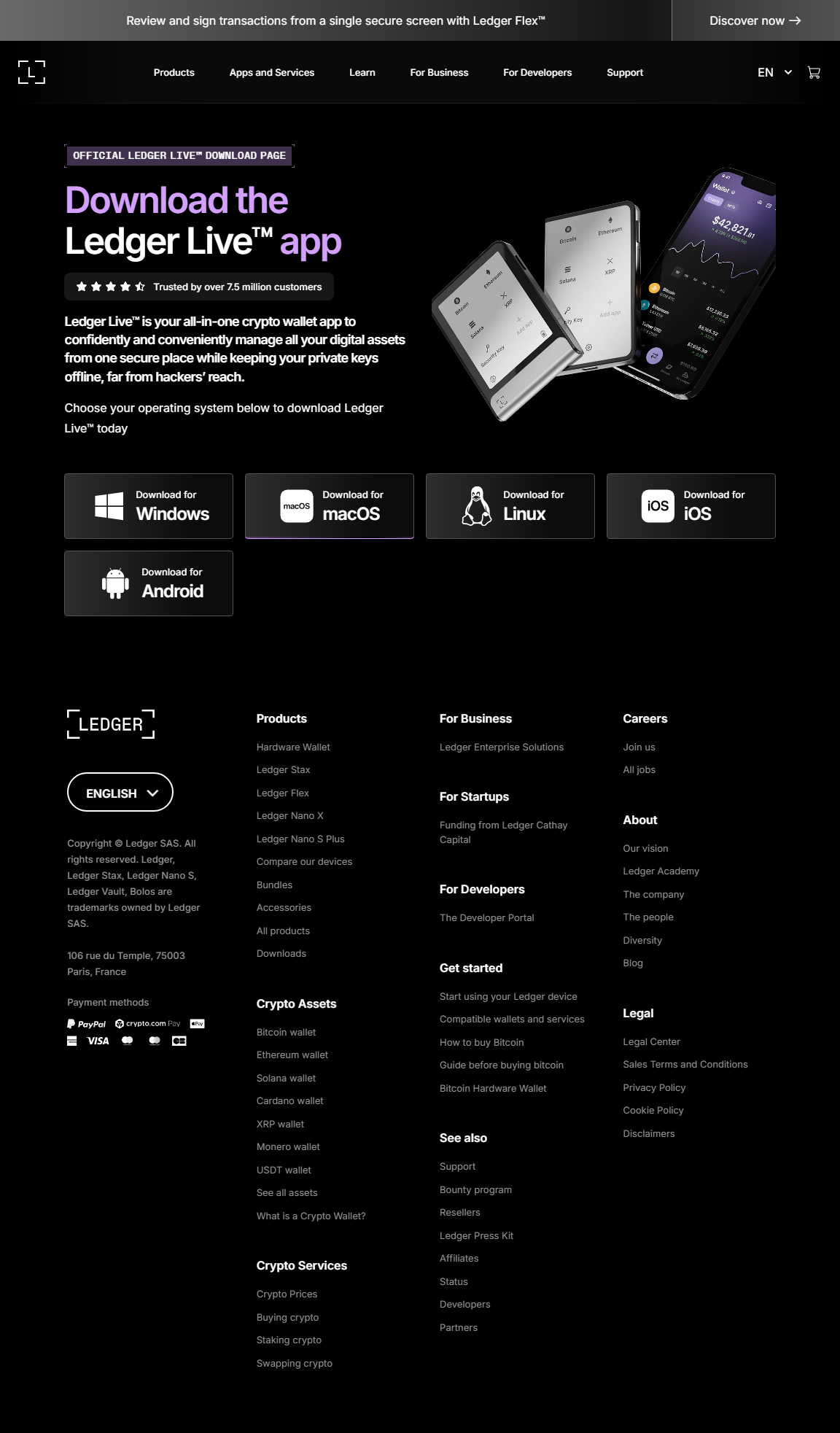
Visit ledger.com/start and download the Ledger Live app for your platform. Always use the official Ledger website for maximum safety.
2️⃣ Connect Your Device
Plug in your Ledger wallet via USB or connect via Bluetooth (for Nano X). Enter your PIN directly on the device to unlock it.
3️⃣ Open Ledger Live
Launch Ledger Live. The app automatically detects your connected device and begins a secure verification process.
4️⃣ Authenticate Securely
Confirm the login request on your device’s screen. This step validates that it’s really you — without exposing any sensitive information.
5️⃣ Access Your Portfolio
Once confirmed, Ledger Live grants you access to your entire portfolio — balances, staking options, NFTs, and transaction history.
6️⃣ Optional: Add App Lock
Enable the password lock inside Ledger Live to prevent others from opening the app on your device, even if it’s unattended.
💡 Why Ledger Login is the Safest Choice for Crypto Users
- Hardware-Backed Authentication: Ledger Login depends on physical device verification, making phishing impossible.
- Offline Key Storage: Private keys never leave your Ledger hardware — not even for login purposes.
- Device Confirmation: Each login must be approved manually on the hardware wallet’s screen.
- Anti-Phishing Security: Ledger devices use unique cryptographic signatures for every session.
- Universal Access: Works across both desktop and mobile devices for consistent security.
Unlike web wallets that rely on email and password combinations, Ledger Login protects you with a decentralized security layer built into your physical wallet — the ultimate “trustless” method of authentication.
📊 Ledger Login vs Traditional Web Logins
| Feature | Ledger Login | Web Login |
|---|---|---|
| Authentication Type | Hardware wallet verification | Email/password |
| Private Key Control | Stored offline inside device | Managed by web service |
| Phishing Protection | Extremely high (manual confirmation) | Low (credential-based) |
| Ownership | User-controlled | Third-party controlled |
| Best For | Investors and HODLers | Short-term traders |
❓ Ledger Login FAQs
1. How do I log in to Ledger Live?
Connect your Ledger device, open Ledger Live, and verify the login request on the device screen. No passwords or online accounts are required.
2. Can I use Ledger Login without my device?
You can access “watch-only mode” to view your portfolio, but you can’t send or sign transactions without your Ledger wallet connected.
3. What if I lose my Ledger device?
Your crypto remains safe. Use your 24-word recovery phrase to restore access on a new Ledger wallet securely.
4. Is Ledger Login available on mobile?
Yes, Ledger Live Mobile (iOS/Android) supports Ledger Login through secure Bluetooth (Nano X) for convenient access on the go.
🚀 Start Securely with Ledger Login
The Ledger Login process transforms crypto security by replacing vulnerable passwords with hardware-based verification. It gives you true ownership of your digital assets — safely, privately, and effortlessly.
Get started today at ledger.com/start and experience the safest way to log in and manage your cryptocurrency portfolio.